
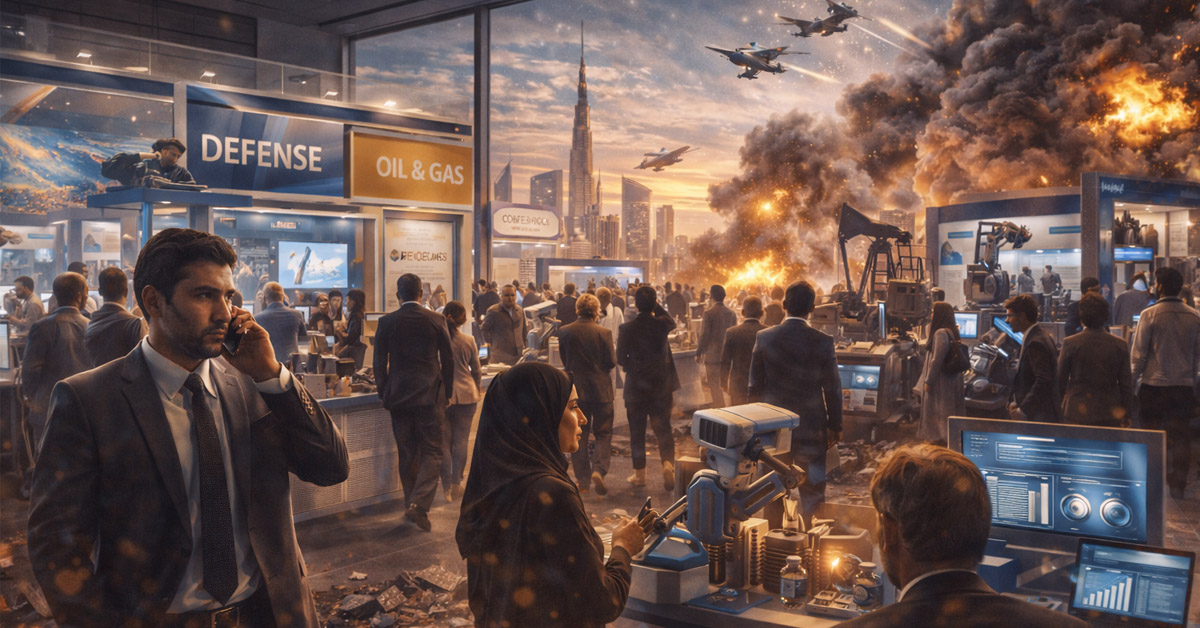
International exhibitions and large-scale conferences play a significant role in the economic development of many Middle Eastern countries, particularly in the Gulf region. Cities such as Dubai, Riyadh, Abu Dhabi, and Doha have become global hubs for business events, attracting thousands of companies and professionals every year.
However, rising geopolitical tensions in the region, including conflicts involving Iran, can create uncertainty that may influence the global events and exhibitions industry.
The Importance of the Events and Exhibitions Industry
Over the past decade, Gulf countries have invested heavily in building world-class exhibition centers, convention facilities, and tourism infrastructure. This investment has positioned the region as a major destination for international trade fairs, professional conferences, and industry gatherings.
The impact of this sector extends far beyond event organizers. Airlines, hotels, tourism companies, logistics providers, and many other industries benefit directly from the growth of business events.
Major Types of Events Potentially Affected
Technology and Innovation Exhibitions
Large technology exhibitions that attract global participation may experience logistical challenges if travel conditions become uncertain during periods of regional tension.
Defense and Security Exhibitions
Defense industry events are closely linked to geopolitical developments. In some cases, interest in these exhibitions may increase during times of conflict, but they also require enhanced security and logistical planning.
Energy Industry Conferences
Energy-related exhibitions often gain greater attention during geopolitical crises because global markets closely monitor developments in the Middle East energy sector.
Tourism and Travel Exhibitions
Event tourism depends heavily on international mobility. Any uncertainty in travel conditions can influence participation levels at major industry events.
Impact on Event Tourism
Regional conflicts may affect event tourism in several ways:
- Some international companies may postpone participation in large delegations.
- Insurance and travel costs may increase.
- Travel plans for global attendees may change.
- Security measures at major events may be strengthened.
Despite these challenges, Gulf countries have demonstrated strong resilience in managing international events and maintaining high standards of safety and organization.
The Gulf's Role as a Global Events Hub
Even during periods of geopolitical tension, Gulf cities continue to host major exhibitions due to their advanced infrastructure, strategic location, and strong business environment.
For many international companies, the region remains a key gateway to markets in the Middle East, Africa, and Asia.
Conclusion
While geopolitical tensions may temporarily influence the events industry, the Middle East—particularly the Gulf region—continues to play a central role in global exhibitions and conferences. Strong infrastructure and proactive event management help ensure that the region remains a major destination for international business events.